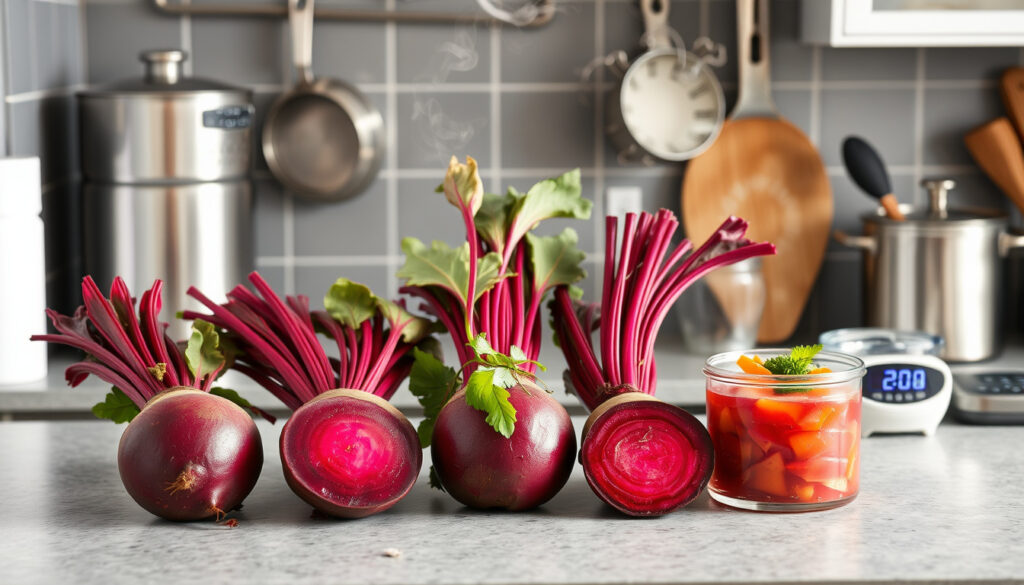
How to Cook Beetroot: 5 Methods, Times, and Health Facts
There’s a quiet moment of victory when a fork slides through a beetroot with no resistance — the universal sign it’s done. Whether you’re prepping a roasted beet salad, a side dish, or a simple vegetable staple, the method you choose changes more than just the timer. This guide compares five cooking techniques — boiling, roasting, microwaving, air frying, and steaming — with concrete times, texture notes, and the health context you need to make an informed choice.
Boiling time for medium beets: 30-45 minutes ·
Roasting temperature: 200°C (400°F) ·
Roasting time (quartered): 40-45 minutes ·
Microwave time (2-3 beets): 8-12 minutes ·
Air fryer time (cubed): 15-20 minutes at 190°C
Quick snapshot
- 30-45 min for medium beets (The Flexitarian)
- No peeling needed before (The Flexitarian)
- Best for even tenderness (The Forked Spoon)
- Color may leach into water (The Flexitarian)
- 40-45 min at 200°C (The Flexitarian)
- Peel before or after optional (BBC Food)
- Concentrates sweetness (The Forked Spoon)
- Better for salads and side dishes (The Flexitarian)
- 8-12 min on high (The Flexitarian)
- Whole or halved beets (The Flexitarian)
- Fastest method (Veg Kitchen)
- Skin can be removed after cooking (The Flexitarian)
- 15-20 min at 190°C (The Flexitarian)
- Cubed beets recommended (Cooking With Camilla)
- Crispy exterior (Cooking With Camilla)
- Lower fat than roasting (The Flexitarian)
If you’re short on time, the microwave is your fast track at 8-12 minutes. If flavour depth matters more, roasting at 200°C for 40-45 minutes delivers a concentrated sweetness that no other method matches. Air frying gives a crispy edge in under 20 minutes but requires cubing the beets first.
Five methods, one key decision: how much time and what texture you want. The table below puts each method side by side so you can see the trade-offs at a glance.
The pattern becomes obvious when you lay them side by side: dry heat methods concentrate flavour, wet methods deliver uniform tenderness, and the microwave breaks every rule on speed.
| Method | Time | Temperature / Setting | Prep | Texture Outcome |
|---|---|---|---|---|
| Boiling | 30–45 min | Simmer on stovetop | Wash, leave unpeeled | Soft, fork-tender |
| Roasting | 40–45 min (quartered) | 200°C (400°F) | Peel and quarter | Caramelized, sweet |
| Microwaving | 8–12 min | High power | Pierce skin, add water | Tender, moist |
| Air Frying | 15–20 min | 190°C | Cubed beets | Crispy exterior, tender interior |
| Steaming | 25–40 min | Steamer basket over simmering water | Whole or halved | Mild, nutrient-retaining |
The pattern is clear: boiling and steaming trade speed for even, gentle cooking, while roasting and air frying concentrate flavour through dry heat. Microwave is the outlier — fastest by a wide margin, but it sacrifices the caramelized crust that many cooks seek.
Microwave power varies significantly across models. Veg Kitchen advises starting with less time and adding more as needed — 2-4 minutes per beet depending on size — because a high-powered microwave can overcook a small beet in under 6 minutes (Veg Kitchen).
What is the best way to cook beetroot?
There is no single winner — each method suits a different goal. Boiling is the most forgiving, roasting delivers the richest flavour, microwaving is the quickest, air frying offers a crispy finish, and steaming preserves the most nutrients. The choice depends on your meal plan, available equipment, and how much time you have.
Boiling beetroot: step by step
- Wash the beetroot thoroughly but do not peel. Trimming the root tail is optional; cutting off the stem end is fine (The Flexitarian).
- Place whole beets in a large pot and cover with cold water by about 2 inches (The Forked Spoon).
- Bring to a boil, then reduce to a simmer. Cook for 30-45 minutes until a knife slides in easily (The Flexitarian).
- Small beets typically take 25-30 minutes; medium to large take 30-45 minutes (The Flexitarian).
- Drain and allow to cool slightly. Rub the skins off with your fingers or a paper towel — they slip off easily (The Flexitarian).
Roasting beetroot: step by step
- Preheat the oven to 200°C (400°F). BBC Food recommends washing, trimming and peeling the beetroot before cutting into quarters (BBC Food).
- Toss the quartered beets with oil, salt, and pepper. Spread in a single layer on a baking tray (The Forked Spoon).
- Roast for 40-45 minutes, turning halfway through, until fork-tender (The Flexitarian).
- For whole beets wrapped in foil, increase time to 45-60 minutes at 425°F (The Forked Spoon).
Microwaving beetroot: step by step
- Pierce the beetroot several times with a fork to allow steam to escape (The Flexitarian).
- Place in a microwave-safe dish with 2 tablespoons of water. Cover loosely with a microwave-safe lid or vented wrap (The Flexitarian).
- Microwave on high for 8-12 minutes depending on size. Let rest for 5 minutes before handling (The Flexitarian).
- Veg Kitchen suggests 2-4 minutes per beet as a rough guide, adding time incrementally (Veg Kitchen).
Air frying beetroot: step by step
- Peel and cube the beetroot into 1-inch pieces (Cooking With Camilla).
- Preheat the air fryer to 190°C or 200°C depending on model. Toss cubes with oil and seasoning (Cooking With Camilla).
- Air fry for 15-20 minutes, shaking the basket halfway through for even cooking (The Flexitarian).
- The beets are done when they are tender and have a slightly crispy exterior (Cooking With Camilla).
Steaming beetroot: step by step
- Place a steamer basket in a large pot with water below the basket level (The Forked Spoon).
- Add whole or halved beets to the basket. Cover and bring water to a simmer (The Forked Spoon).
- Steam for 30-40 minutes for whole beets, checking tenderness with a fork (The Flexitarian).
- The Forked Spoon gives a range of 30-45 minutes at a consistent simmer (The Forked Spoon).
The trade-off: steaming retains more water-soluble nutrients than boiling, but takes longer than microwaving. It’s a middle-ground choice that works well when you’re cooking multiple beetroot and want uniform tenderness across all pieces.
Do I peel beetroot before boiling?
The short answer: no — not if you boil. Every source consulted recommends boiling beetroot with the skin on, then peeling after cooking when the skins slip off easily. Peeling before is possible but comes with trade-offs.
Should you peel beetroot before or after cooking?
- After cooking (recommended): The Flexitarian and The Forked Spoon both recommend boiling whole unpeeled beets, then rubbing the skins off after cooling slightly (The Flexitarian, The Forked Spoon). This method preserves more colour and nutrients inside the beet.
- Before cooking (for roasting): BBC Food recommends peeling before roasting, then cutting into quarters, because the dry heat of roasting doesn’t loosen the skin the way boiling does (BBC Food). Skins left on during roasting can become tough and papery.
- Before boiling (possible but less ideal): Peeling before boiling is possible but causes more colour and nutrient bleed into the water. The beets retain less vibrant colour and lose some water-soluble vitamins.
How to peel cooked beetroot easily
- After boiling or steaming, drain the beets and let them cool just enough to handle — about 5 minutes (The Flexitarian).
- Hold the beet in a paper towel or kitchen cloth and rub firmly. The skin should slide off in large pieces (The Flexitarian).
- For stubborn patches, use the edge of a small knife. Running cold water over the beet can also help loosen remaining skin.
- Tip from the Flexitarian: A sharp knife slid just under the skin is a clean alternative if the skins are not slipping (The Flexitarian).
The implication: peeling after cooking is the default for boiling, steaming, and microwaving. Only roasting requires peeling before. This one rule saves time and keeps more of the beet’s colour in the dish.
Beetroot stains both hands and cutting boards. Wear kitchen gloves when handling raw peeled beets, and avoid wooden cutting boards — plastic or glass surfaces clean far more easily. A splash of lemon juice helps remove stains from fingers.
Can heart patients eat beetroot?
Yes, with caution and ideally under medical guidance. Beetroot is rich in dietary nitrates, which the body converts to nitric oxide — a compound that helps relax and widen blood vessels. The evidence for cardiovascular benefit is real, but several nuances matter.
Beetroot and heart failure recovery
- Beetroot juice is being studied for heart failure recovery. myDr.com.au, a Tier 2 health information provider, reports some evidence that beetroot juice may improve exercise capacity and blood vessel function in heart failure patients (myDr.com.au).
- A 2018 clinical trial published in the Journal of the American Heart Association found that beetroot juice improved muscle function in heart failure patients with preserved ejection fraction (Journal of the American Heart Association).
- However, the optimal frequency and dosage remain unclear. No large-scale studies have established a standard protocol for heart failure patients.
Beetroot juice and blood pressure
- The British Heart Foundation notes that beetroot juice can lower blood pressure within a few hours of consumption due to its nitrate content (British Heart Foundation).
- This effect is temporary and does not replace prescribed antihypertensive medication.
- Patients already on blood pressure medication should monitor their levels closely, as the combined effect may cause hypotension — dangerously low blood pressure.
Can beetroot unclog arteries?
- No reputable clinical study has demonstrated that beetroot can unclog already-narrowed arteries.
- What the evidence does show: improved vascular function and better blood flow — but that is not the same as reversing plaque buildup (Journal of the American Heart Association).
- Heart patients should discuss any major dietary changes — including a high-nitrate beetroot regimen — with their cardiologist.
Why this matters: beetroot is widely marketed as a heart-healthy superfood, but the gap between “improves blood flow” and “reverses heart disease” is wide. For most heart patients, moderate beetroot consumption is safe and possibly beneficial, but it is not a standalone therapy.
The British Heart Foundation warns patients on blood pressure medication that a single glass of beetroot juice can drop blood pressure measurably within 2-3 hours. If you’re already on medication, test your response in a controlled setting — ideally with a home BP monitor — before making it a daily habit (British Heart Foundation).
Does beetroot lower cortisol levels?
This is among the most frequently searched beetroot health questions, yet the scientific answer is surprisingly thin. The direct evidence linking beetroot consumption to lower cortisol levels in humans is limited and far from conclusive.
Scientific evidence on beetroot and cortisol
- As of 2024, no large-scale, peer-reviewed clinical trial has demonstrated that beetroot significantly lowers cortisol in healthy adults.
- A small 2015 study examined nitrate supplementation and cortisol response to exercise, but the results showed no significant reduction in cortisol levels (National Institutes of Health / PubMed).
- Some menopause-focused wellness sources assert benefits, but these claims are not backed by robust clinical data. They rely on indirect nutrient mechanisms (magnesium, nitrates) rather than direct cortisol measurement.
Beetroot nutrients that may influence stress response
- Beetroot contains magnesium (~23 mg per 100g), a mineral associated with stress regulation and nervous system function.
- Nitrates in beetroot improve blood flow to the brain, which may theoretically support cognitive resilience under stress — but this is speculative, not proven (National Institutes of Health / PubMed).
- The lack of direct cortisol evidence means anyone hoping to use beetroot specifically for stress management should manage expectations.
The pattern: beetroot’s nitrate and magnesium content support general physiological health, but the specific cortisol-lowering claim is not supported by credible scientific literature. For now, a balanced diet and sleep hygiene remain evidence-based stress strategies. Beetroot is a nutritious addition — not a targeted cortisol intervention.
Who should not eat beetroot?
Beetroot is safe for most people, but several groups should be cautious. The main concerns involve kidney stones, blood pressure interactions, and the harmless — but often alarming — phenomenon of red urine and stool.
Beetroot and kidney stones risk
- Beetroot is high in oxalates, compounds that can contribute to the formation of calcium oxalate kidney stones (National Kidney Foundation).
- People with a history of oxalate kidney stones should limit beetroot consumption. The National Kidney Foundation advises that high-oxalate foods like beets, spinach, and rhubarb be consumed in moderation by those prone to stones (National Kidney Foundation).
- Those without a stone history are generally not at risk from moderate beetroot intake (1-2 servings per week).
Beetroot and blood pressure medication interaction
- Beetroot’s natural nitrate content lowers blood pressure. When combined with antihypertensive medication, the effect can be additive, potentially causing hypotension (British Heart Foundation).
- Symptoms of hypotension include dizziness, fainting, blurred vision, and fatigue.
- Patients on blood pressure medication should introduce beetroot gradually and measure their response. A dialogue with their healthcare provider is essential before making beetroot a regular part of the diet.
Beetroot beeturia: harmless red urine and stool
- Beeturia — the red or pink discolouration of urine after eating beets — occurs in about 10-14% of the population. It is a harmless genetic trait related to how quickly the body processes betacyanin, the pigment that gives beets their colour (National Institutes of Health / PubMed).
- Red stool after eating beets is also typically benign, though it can be mistaken for blood. The distinction is important: beet stool discolouration vanishes within 24-48 hours, while blood in stool persists and often has different characteristics.
- If you experience beeturia, there is no medical concern. However, anyone who notices red urine or stool without a clear dietary link should consult a doctor to rule out other causes.
Frequently asked questions
Can I eat beetroot raw?
Yes. Raw beetroot is crunchy and slightly earthy. It can be grated into salads, spiralised, or sliced thinly for carpaccio. Cooking softens the texture and concentrates sweetness, but raw beets retain all their nutrients and are perfectly safe to eat (Veg Kitchen).
How do I know when beetroot is cooked?
A knife or fork should slide into the thickest part of the beetroot with almost no resistance. For boiled or steamed beets, the skin should also be loose and easy to rub off. Roasted beets will appear slightly caramelised on the edges and yield easily to a fork (The Flexitarian).
Should I add vinegar when boiling beetroot?
Adding a splash of vinegar or lemon juice to the boiling water is a common technique. It can help preserve the beetroot’s colour and is often recommended for pickled beetroot recipes. However, it is not necessary for standard boiling. The Flexitarian notes that many recipes skip it entirely (The Flexitarian).
Can beetroot be frozen after cooking?
Yes. Cooked beetroot freezes well for up to 3 months. Let the beets cool completely, then store them in an airtight freezer bag or container. For best results, peel and slice or dice them before freezing so you can use portions directly from the freezer without thawing the whole batch (Veg Kitchen).
Is beetroot good for high blood pressure?
Yes, the evidence is strong. The British Heart Foundation confirms that beetroot juice can lower blood pressure within hours due to its nitrate content being converted to nitric oxide, which relaxes blood vessels. The effect is temporary, so regular consumption is needed for sustained benefit (British Heart Foundation).
What is the healthiest way to cook beetroot?
Steaming is generally considered the healthiest method because it preserves more water-soluble nutrients (like folate, vitamin C, and betalains) compared to boiling, where nutrients leach into the water. Roasting is also healthy but uses high heat, which can degrade some heat-sensitive vitamins. Microwaving retains nutrients well due to its short cooking time (Veg Kitchen).
For the average home cook in the UK or US, the choice between methods comes down to time and texture, not nutrition — all five methods produce a nutritious result. The real leverage point is peeling: boil or steam with the skin on, roast with it off. For those managing heart conditions or kidney stone risk, the implication is clear: consult a doctor before making beetroot a daily staple, or face the consequences of a well-intentioned but unmonitored dietary shift.
More related posts
 Life in the UK Test: Pass Mark, Cost & Preparation Tips
 Jules Ari: Biography, Net Worth, Age, and Career Insights
 Demitra Kalogeras: Age, Nationality, Sisters & Full Name
 Make Money From Home – Legit UK Side Hustles and Guides
 Hearts vs Dundee United – 3-0 Result, Scorers and Report
 Sinéad Cusack: Biography, Family, and Life with Jeremy Irons
 How Much Is National Insurance – UK Rates and Thresholds 2024/25
 IKEA Wardrobe Guide: PAX, Doors & Small Room Ideas
