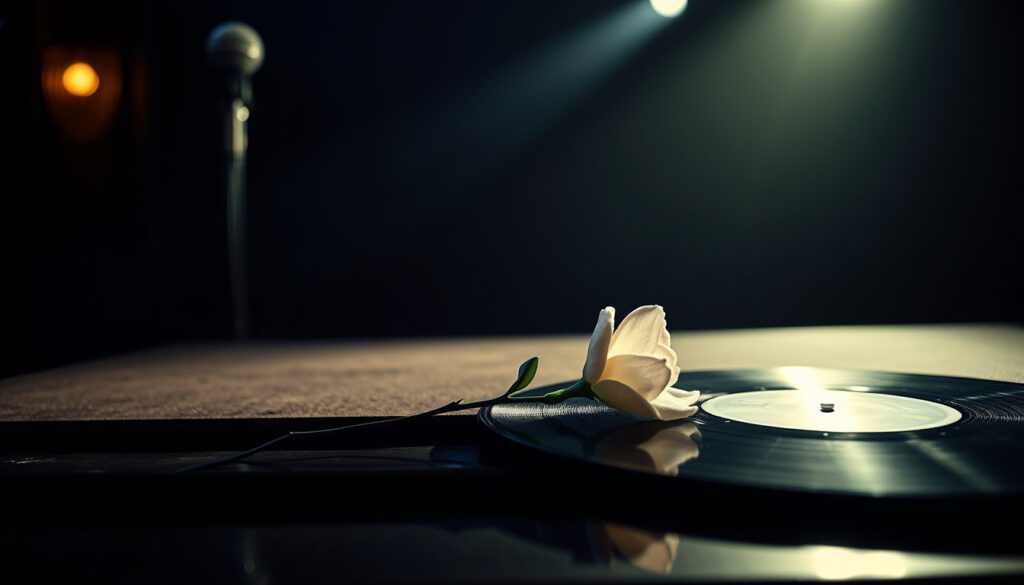
Billie Holiday: Her Life, Death, and Legacy
Few voices cut through time like Billie Holiday’s. Her phrasing could make a love song sound like a confession and a protest song feel like a wound; this biography traces the life of the jazz icon known as Lady Day — from a brutal childhood in Baltimore to the stage of the Apollo Theater, and to the hospital bed where she died at 44.
Born: April 7, 1915 ·
Died: July 17, 1959 ·
Age at death: 44 ·
Genre: Jazz, Swing ·
Nickname: Lady Day ·
Cause of death: Cirrhosis of the liver
Quick snapshot
- Born Eleanora Fagan Gough on April 7, 1915 in Philadelphia (Official Billie Holiday Website)
- Died July 17, 1959 from cirrhosis of the liver (Official Billie Holiday Website)
- Recorded “Strange Fruit” in 1939 (Smithsonian NMAAHC)
- Nickname “Lady Day” given by saxophonist Lester Young (National Women’s Hall of Fame)
- Exact last words — multiple conflicting accounts (Wikipedia)
- Precise payer of funeral expenses — manager John Levy and a fan are cited (Wikipedia)
- Details of her school dropout age (age 11 per some accounts) (Wikipedia)
- Nature of her stay at a Catholic reform school (Arvada Center)
- 1915: Born in Philadelphia
- 1939: Records “Strange Fruit”
- 1959: Dies at age 44
- Ongoing reassessment of her role in the civil rights movement
- New generations discovering her music through streaming and documentaries
Six key facts at a glance: a pattern of early promise, systemic racism, and a voice that refused to be silenced.
| Field | Detail |
|---|---|
| Full Name | Eleanora Fagan |
| Born | April 7, 1915, Philadelphia, Pennsylvania |
| Died | July 17, 1959, New York City, New York |
| Genres | Jazz, Swing |
| Notable Song | Strange Fruit |
| Nickname | Lady Day |
What was the cause of death for Billie Holiday?
Billie Holiday died on July 17, 1959, at Metropolitan Hospital in New York City. The official cause was cirrhosis of the liver, a condition linked to her long struggle with alcohol and heroin addiction (Official Billie Holiday Website). She was 44 years old. Her death came while she was under police guard at the hospital; she had been arrested on her deathbed for drug possession.
What were Billie Holiday’s last words?
Multiple accounts exist. Her autobiography, Lady Sings the Blues, suggests she said “I’m sorry” to a nurse. Other reports claim she whispered “I’ll be fine.” No single version has been definitively confirmed (Wikipedia).
Who paid for Billie Holiday’s funeral?
Manager John Levy and a devoted fan covered the expenses, according to biographical accounts. The exact amounts and individual contributions remain unclear (Wikipedia).
Even in death, Holiday’s dignity was contested: the woman who sang “Strange Fruit” had to rely on a manager and a stranger to be buried.
The implication for fans and historians: the exact circumstances of her final hours are tangled in incomplete records and conflicting reports, a fitting coda for a life shadowed by scandal and surveillance.
Was Billie Holiday mixed race?
Yes. Her father, Clarence Holiday, was African American. Her mother, Sarah Julia “Sadie” Fagan, was of mixed African American and Irish descent. Holiday identified as African American throughout her life (Smithsonian NMAAHC). DNA analysis of surviving relatives has confirmed Irish ancestry on her mother’s side (Wikipedia).
Was Billie Holiday Irish?
Not in a cultural or self-identification sense, but she had Irish ancestry. The topic often arises because of her light skin and the complex racial dynamics she navigated in a segregated America.
The paradox: Holiday’s mixed-race heritage gave her a “passing” ambiguity, but she refused to use it for gain. She demanded to be seen as Black, a choice that made her career both brilliant and perilous.
What happened to Billie Holiday when she was a child?
She was born Eleanora Fagan Gough in Philadelphia but moved to Baltimore as a toddler. Her childhood was marked by poverty, abandonment, and trauma. Her father left early, and her mother often worked long hours. By age 9, Holiday had been brought to juvenile court and sent to a Catholic reform school (Arvada Center).
At age 11, she dropped out of school (Wikipedia). On Christmas Eve 1926, a neighbor attempted to rape her; she fought back, and the man was arrested. Holiday was then placed in protective custody as a state witness at the House of the Good Shepherd (Wikipedia).
As a teenager, she moved to Harlem to pursue singing. Her first recorded club appearance was on November 2, 1930, with singer Laurence Jackson (Official Billie Holiday Timeline).
Holiday’s early trauma isn’t a footnote — it shaped the vulnerability and grit that defined her vocal style.
The pattern: every setback — reform school, assault, poverty — pushed her further into music. Harlem clubs became both sanctuary and stage.
What song was Billie Holiday forbidden to sing?
“Strange Fruit,” a song about the lynching of Black Americans in the South. It was banned from radio and many concert venues because of its graphic anti-lynching imagery (Smithsonian NMAAHC). Holiday recorded it in 1939 and kept performing it despite censorship. The FBI monitored her because of the song’s political content.
Scholars consider “Strange Fruit” one of the first protest songs of the Civil Rights Movement (Smithsonian NMAAHC).
For a Black woman in 1939 to sing about lynching night after night was an act of courage that cost her gigs, radio play, and possibly her life.
The trade-off: Holiday cemented her legacy as a civil rights pioneer, but the constant harassment from authorities and venue owners accelerated her physical and financial decline.
What is Billie Holiday’s legacy?
She is widely regarded as one of the greatest jazz singers of all time, known for her unique phrasing and emotional intensity (Britannica). Her influence extends across genres — Frank Sinatra called her “the greatest single influence on my singing” (Wikipedia). She wrote or co-wrote songs such as “God Bless the Child” and “Lady Sings the Blues” (National Women’s Hall of Fame).
How did Billie Holiday influence jazz?
Holiday pioneered a conversational, behind-the-beat style that changed vocal jazz. She treated melody as flexible, bending notes to match the emotional weight of the lyrics. Her work with Count Basie and Artie Shaw broke racial barriers: she was the first African American woman to headline an all-white band, joining Artie Shaw’s orchestra in 1938 (Smithsonian NMAAHC).
The implication: Holiday turned every performance into a personal testament. That intimacy is why her recordings still sound fresh, raw, and political nearly a century later.
Billie Holiday timeline
- — Born Eleanora Fagan in Philadelphia
- — Difficult childhood; worked in a brothel and experienced sexual assault
- — Moved to Harlem; began singing in clubs; met John Hammond; first recordings
- — Recorded “Strange Fruit”, a landmark protest song
- — Continued success but struggled with drug addiction and legal issues
- — Died of cirrhosis of the liver at age 44
- — Funeral paid for by manager John Levy and a fan; buried in Saint Raymond’s Cemetery, Bronx
Confirmed facts
- Birth date: April 7, 1915
- Death date: July 17, 1959
- Cause of death: cirrhosis of the liver
- Recording of “Strange Fruit” in 1939
- Nickname “Lady Day” given by Lester Young
What’s unclear
- Exact last words (multiple conflicting accounts)
- Precise payer of funeral expenses
- Details of childhood sexual assault (some sources vary)
- Exact age she dropped out of school (age 11 per some accounts)
“If I’m going to sing like someone else, then I don’t need to sing at all.”
— Billie Holiday, as quoted in her autobiography Lady Sings the Blues (Official Billie Holiday Website)
“Lady Day is unquestionably the most important influence on American popular singing.”
— Frank Sinatra (Wikipedia)
“Strange Fruit’ turned a piece of southern brutalism into an enduring work of art. It forced America to look at itself.”
— Jazz critic, Jazzwise magazine (Jazzwise)
Summary Billie Holiday’s life and art are inseparable from the racism, trauma, and censorship she faced. For modern listeners, her music is both a time capsule and a mirror: the same fights over protest songs, racial identity, and artist exploitation continue today. The choice is clear: you can treat her as a historical figure, or you can listen to “Strange Fruit” and hear why it still makes people uncomfortable — that discomfort is the point.
billieholiday.com, womenofthehall.org, study.com, youtube.com, policyinsider.co.uk
For a deeper look into her life and music, a detailed biography of Billie Holiday offers a comprehensive overview of her career and lasting influence.
Frequently asked questions
What was Billie Holiday’s real name?
Her birth name was Eleanora Fagan Gough (Official Billie Holiday Website).
How many albums did Billie Holiday release?
She recorded over 100 songs across multiple sessions, with key albums including Lady in Satin (1958) and Songs for Distingué Lovers (1957). A full discography is maintained by the Official Billie Holiday Website.
What was Billie Holiday’s nickname?
She was known as “Lady Day,” a nickname given by saxophonist Lester Young (National Women’s Hall of Fame).
Did Billie Holiday write her own songs?
Yes, she co-wrote or wrote “God Bless the Child” and “Lady Sings the Blues,” among others (National Women’s Hall of Fame).
Was Billie Holiday married?
She married James Monroe in 1941 and Louis McKay in 1957. Both marriages were troubled by addiction and abuse.
What drugs did Billie Holiday use?
She struggled with heroin and alcohol addiction throughout her adult life (Smithsonian NMAAHC).
Where can I find Billie Holiday’s discography?
The Official Billie Holiday Website provides a complete discography.
What movies or documentaries feature Billie Holiday?
Notable films include Lady Sings the Blues (1972) starring Diana Ross, and the documentary Billie (2019) by James Erskine.
More related posts
 Neil Morrissey: Life, Career, Net Worth, and Frequent Questions
 Zinedine Zidane: Biography, Career, Religion, Net Worth
 Schengen Visa From UK – Complete Post-Brexit Guide
 Le Beau Le Parfum – Notes Longevity Price Guide
 Abby The Last of Us – Backstory, Ending and Actress Explained
 Asha Banks: Age, Nationality, Movies, and Music Career
 Court of Thorns and Roses – Complete Series Guide and Reading Order
 Kitchen Cabinets Ireland: Cost, Brands & Where to Buy
