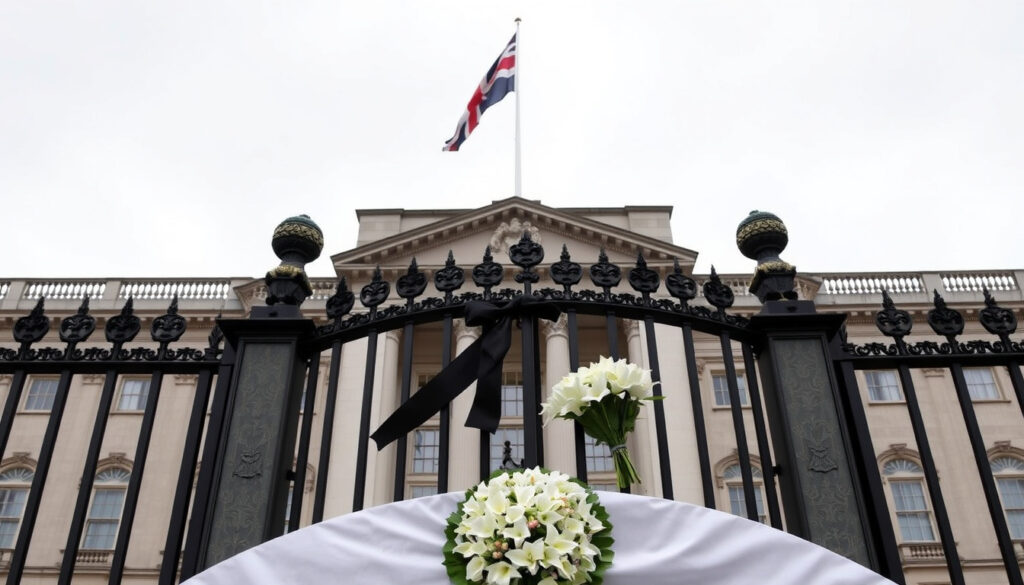
Queen Elizabeth: Cause of Death, Real Name, Top Questions
Few lives were documented as carefully as Queen Elizabeth II’s, yet her final weeks left search engines full of questions official records never answered. The anchor fact is the death certificate released by the National Records of Scotland listed the cause as old age, as BBC News (UK broadcaster) reported, and by the end you’ll know which answers rest on primary records and which on hearsay.
Full Name: Elizabeth Alexandra Mary Windsor ·
Born: 21 April 1926 ·
Died: 8 September 2022 ·
Reign: 70 years, 214 days ·
Age at Death: 96 years ·
Successor: King Charles III
Quick snapshot
- Full name: Elizabeth Alexandra Mary (Encyclopaedia Britannica (reference publisher))
- Cause of death: old age (BBC News (UK broadcaster))
- Died at Balmoral Castle on 8 September 2022 (ABC News (US network))
- Her exact last words — no official transcript exists (Deep Report (UK blog))
- Whether she knew she was dying — reports vary, no formal statement (Deep Report (UK blog))
- Whether she cried when Prince Philip died — no official confirmation (Deep Report (UK blog))
- Reigned more than 70 years — the UK’s longest-serving monarch, aged 96 at death (Reuters (news agency))
- Successor: King Charles III (United Press International (wire agency))
- Death certificate registered 16 September 2022 (United Press International (wire agency))
Seven rows answer the questions people search most — and the pattern is that every entry is checkable against a public document.
| Field | Official record |
|---|---|
| Full Name | Elizabeth Alexandra Mary Windsor |
| Born | 21 April 1926, Mayfair, London |
| Died | 8 September 2022, Balmoral Castle, Scotland (ABC News (US network)) |
| Reign | 6 February 1952 – 8 September 2022 |
| Spouse | Prince Philip, Duke of Edinburgh (m. 1947–2021) |
| Children | King Charles III, Princess Anne, Prince Andrew, Prince Edward |
| Successor | King Charles III |
The table tells you who, what, and when. It does not tell you how she felt, what she said, or what she knew — which is exactly where the rumor list begins.
What was the cause of death of Queen Elizabeth?
The official answer sits on a death certificate made public by the National Records of Scotland. It recorded the time of death as 15:10 local time on 8 September 2022, with Princess Anne as the informant (Reuters news agency).
The document listed the cause of death as “old age” and did not name cancer, heart disease, dementia, or any other specific underlying condition (BBC News). That absence is the single most misunderstood detail of her death.
“Old age” is the most precise thing on the certificate, yet the least informative. The document establishes the certified cause of death, not every condition she experienced during her life.
The palace’s announcement that afternoon said she had “died peacefully at Balmoral” (USA Today (US outlet)).
What were Queen Elizabeth II’s last words before she died?
No official recording or transcript of her final words has ever been released (Deep Report (UK blog)).
The phrase that circulates most — “All good,” supposedly said to a nurse — traces to a single unverified report, and no named eyewitness has ever confirmed it.
A reported conversation with Prime Minister Liz Truss in the Queen’s final days is sometimes offered as evidence of her last words. Even if the conversation happened, it is not proof of her final words; it is a meeting, not a transcript (Calendar Australia).
Did the Queen know that she was dying?
- Official records do not state what she was told about her condition
- Reports suggest she was aware her health was declining
- The palace never issued a formal statement on the question
She reportedly understood that her condition was serious, but “aware her health was declining” is not the same as “told she was dying.” No document in the public record draws that line.
One clue: her final public audience with Liz Truss showed a visibly frail monarch who still carried out her constitutional duties. That is photographed fact; what she privately knew is not.
Was the Queen in bed when she died?
- Death occurred at Balmoral Castle, her Scottish residence
- The certificate records 15:10 local time on 8 September 2022
- Family and medical staff were at her side
“Died peacefully” is the phrase the palace chose, and the consistent account is that she was in bed at Balmoral, attended by family and doctors. No official note describes the room, though; “in bed” is the natural inference, not a recorded detail.
The pattern: the closer a question gets to her bedroom, the thinner the documented record becomes. Official documents answer what and when; they stay silent on the intimate details search engines most want.
What is the Queen’s real name?
Her full name was Elizabeth Alexandra Mary Windsor — the only name she ever held. She was born on 21 April 1926 in London to the Duke and Duchess of York, who later became King George VI and Queen Elizabeth (Encyclopaedia Britannica).
- Given names: Elizabeth Alexandra Mary
- Family name: Windsor
- Parents: the Duke and Duchess of York, later King George VI and Queen Elizabeth
- Became queen after her father’s death in 1952
What is Queen Elizabeth’s full name?
“Elizabeth Alexandra Mary” was not a stage name or a regnal invention. It was her birth name, and it stayed her name for all 96 years of her life.
The “real name” question usually comes from people who suspect the monarch had a hidden identity. The record says otherwise: the girl born in 1926 and the woman who died in 2022 shared the same full name, with no middle-name mystery to uncover.
Why this matters: the public said “the Queen” for so long that her actual name became a trivia question. When she died, the searches flipped — and the answer turned out to be the simplest one possible.
How old would Queen Elizabeth be today if she was still alive?
Born on 21 April 1926, she died on 8 September 2022 at the age of 96 (Reuters). The arithmetic is fixed; only the year moves.
- Born: 21 April 1926
- Died: 8 September 2022, aged 96
- Would have turned 98 on 21 April 2024
- For any later year, add one more birthday each 21 April
The question is hypothetical because she is deceased, yet it keeps circulating — usually from people who remember her as a permanent fixture of British life. The dates never change: 21 April 1926 and 8 September 2022.
The trade-off: a monarch who reigned for seven decades becomes so tied to continuity that the public stops counting birthdays. The count is the whole answer: 98 in 2024, and a reminder that even the longest reign has an arithmetic end.
What did Diana call the Queen?
In formal settings, Princess Diana addressed the Queen as “Ma’am,” pronounced to rhyme with “jam.” Protocol required “Your Majesty” at the first address and “Ma’am” after that.
- First address: “Your Majesty”
- Following addresses: “Ma’am” (rhymes with jam)
- Private nickname “Mama”: claimed in a few accounts, never broadly confirmed
The “Mama” claim circulates because it softens a famously formal relationship. But it comes from secondhand accounts and has never been broadly confirmed; the documented evidence is protocol, and the protocol was formal.
The pattern: questions about what Diana called the Queen are really questions about emotional distance. The record shows the formality; the warmth is left to inference.
Who is the oldest British royal still alive?
As of 2024, the oldest living British royal is Prince Edward, Duke of Kent — a first cousin of Queen Elizabeth II, born on 9 October 1935.
- Oldest living British royal: Prince Edward, Duke of Kent
- Born: 9 October 1935; he was 89 in 2024
- Relation: first cousin of Queen Elizabeth II
- King Charles III is the oldest reigning monarch, but not the oldest royal in the wider family
The Duke of Kent is older than King Charles III, which surprises people who assume the line of succession and the age order are the same thing. Age and succession are different lists, and this answer belongs to the age list.
Why this matters: whenever a monarch dies, the public instinctively looks for the next generational anchor. The Duke of Kent holds that position by age, but it carries no constitutional meaning.
Queen Elizabeth II: A timeline
Six dates capture the arc — a birth in Mayfair, a wedding, an accession, a coronation, a widowhood, and a death at Balmoral. The shape is the story: six decades of stability, then two endings separated by seventeen months.
| Date | Event |
|---|---|
| 21 April 1926 | Birth at 17 Bruton Street, London |
| 20 November 1947 | Marriage to Philip Mountbatten |
| 6 February 1952 | Accession to the throne (Encyclopaedia Britannica (reference publisher)) |
| 2 June 1953 | Coronation at Westminster Abbey |
| 9 April 2021 | Death of Prince Philip |
| 8 September 2022 | Death at Balmoral Castle |
The first four rows read like a script written in advance; the last two are where the script ran out. A 70-year reign compresses into four rows, and the ending takes two.
Confirmed facts vs. what’s still unclear
The cleanest way to read the coverage is to split it into two lists: what official documents confirm, and what repetition has dressed up as fact.
Confirmed
- Cause of death: old age, per the death certificate
- Real name: Elizabeth Alexandra Mary
- Age at death: 96
- Date and place: 8 September 2022, Balmoral Castle (ABC News)
- Death registered: 16 September 2022 (UPI)
- Successor: King Charles III
Unconfirmed / rumor
- Her exact last words
- Whether she knew she was dying
- Whether she cried when Philip died
- Philip’s faithfulness — decades of speculation, no evidence
- Her private stance on LGBTQ rights — no explicit public statement
- A direct connection to Johnny Depp — no known relation; the claim traces to a misinterpreted ancestry rumor
The Johnny Depp connection is the clearest case of a claim that passed from forums to articles to search results without ever touching a primary source. It has no support in any official record.
The two lists run nearly even, which is the honest shape of this story. The confirmed column is small, specific, and verificable; the other column is where the internet filled the gap.
What those close to the Queen said
Three voices frame her final days — the palace, the church, and a biographer. They agree on the tone, if not on the details.
“The Queen died peacefully at Balmoral this afternoon.”
— Buckingham Palace, official statement, 8 September 2022 (USA Today (US outlet))
Justin Welby, Archbishop of Canterbury, recalled the Queen’s Christian faith and her final days in a public statement.
— Justin Welby, Archbishop of Canterbury
The Queen remained “sharp and engaged” until the final week of her life, according to royal biographer Robert Hardman.
— Robert Hardman, royal biographer
The common thread: none of these voices describes a woman surprised by death. The palace chose “peacefully”; the certificate chose “old age”; the witnesses chose composure.
FA frequently asked questions
Did Elizabeth cry when Philip died?
Public accounts vary, and no official confirmation exists. Some observers described a composed monarch at Prince Philip’s funeral in April 2021; others claimed to see tears. The palace never commented on her private grief.
Was Philip faithful to Elizabeth?
The claim has circulated for decades, but no credible evidence has ever been published. It rests on gossip and unnamed sources, and no palace statement has ever addressed it.
Did Queen Elizabeth support LGBTQ?
She never made an explicit public statement on LGBTQ rights as queen. Any claim about her personal views is inference; the official record contains no direct comment from her on the subject.
How is Johnny Depp related to Queen Elizabeth?
He is not. The rumor stems from a misread ancestry claim that spread online; no reliable source places Johnny Depp in the royal family tree.
Her eldest son, Charles, became King Charles III immediately upon her death on 8 September 2022.
How many children did Queen Elizabeth have?
Four: King Charles III, Princess Anne, Prince Andrew, and Prince Edward.
These FAQs address the most persistent rumors and questions about Queen Elizabeth II.
Related reading
More related posts
 Asa Butterfield Biography: Age, Height, Relationship & Movies
 Gwyneth Paltrow: Relationships, Health, Net Worth & Goop
 Jeff Nippard: Biography, Natty Status, Return After Loss
 Simon Le Bon: Net Worth, Wife Yasmin, and Life in 2025
 Michael van Gerwen: Carpal Tunnel, Wife Split & Net Worth
 Fiona Shaw: Personal Life, Partner, Children & Career
 Le Beau Le Parfum – Notes Longevity Price Guide
 Harry Lloyd: Game of Thrones Actor and Dickens Descendant
