Norman Foster Architect: Biography, Iconic Buildings & Net Worth
Norman Foster wasn’t born into architecture—he worked as a clerk before enrolling at university. That is one of many small surprises in a career that has reshaped skylines from London to Hong Kong.
Born: Manchester, England, 1935 ·
Firm Founded: Foster + Partners, 1967 (London) ·
Pritzker Prize: 1999 ·
Knighthood: 1990 ·
Notable Building Count: Over 300 projects in 50+ countries ·
Net Worth (Est.): Reported on UK Rich List (multiple years)
Quick snapshot
- Born in Manchester in 1935 Encyclopaedia Britannica
- Founded Foster + Partners in 1967 Pritzker Architecture Prize
- Pritzker Prize laureate in 1999 International Academy of Architecture
- Exact net worth not publicly disclosed World-Architects
- Number of personal residences unconfirmed (World-Architects)
- Year of knighthood varies by source (World-Architects)
- Attribution of 30 St Mary Axe — designed by the firm, not solely by Foster (World-Architects)
- Active from 1967 to present
- Still serves as Executive Chairman of Foster + Partners
- Ongoing major projects including Apple Park and Bloomberg’s European HQ International Academy of Architecture
Foster’s career is the rare case of a single architect earning a personal fortune while leading a global practice. For young architects, the implication is clear: institutional prestige and commercial success are not mutually exclusive.
Here are the essential biographical details that define Foster’s profile.
| Label | Value |
|---|---|
| Full Name | Norman Robert Foster |
| Born | 1 June 1935, Manchester, England |
| Nationality | British |
| Occupation | Architect, urbanist |
| Awards | Pritzker Architecture Prize (1999), RIBA Gold Medal, AIA Gold Medal |
| Key Buildings | 30 St Mary Axe, Reichstag Dome, HSBC Main Building |
Who is Norman Foster and why is he famous?
Early life and education
- Born on 1 June 1935 in Manchester, England, to a working-class family. His father was a factory worker Encyclopaedia Britannica.
- After clerical work, he studied architecture and city planning at the University of Manchester, graduating in 1961 International Academy of Architecture.
- Won a Henry Fellowship to Yale University, earning a Master’s in Architecture International Academy of Architecture.
His early path mirrors that of another self-made innovator: Henry Ford: Biography, Inventions, and Lasting Legacy — both started with modest means and used formal education as a springboard to reshape their industries.
Founding of Foster + Partners
- Founded Foster Associates in London in 1967 with his late wife Wendy International Academy of Architecture.
- The firm evolved into Foster + Partners, now a global practice with offices in more than twenty countries Pritzker Architecture Prize.
- Foster serves as Executive Chairman and chairs the Design Board International Academy of Architecture.
The implication: formal education and risk-taking can yield outsized influence in a profession known for boutique practices.
What is Norman Foster’s most famous building?
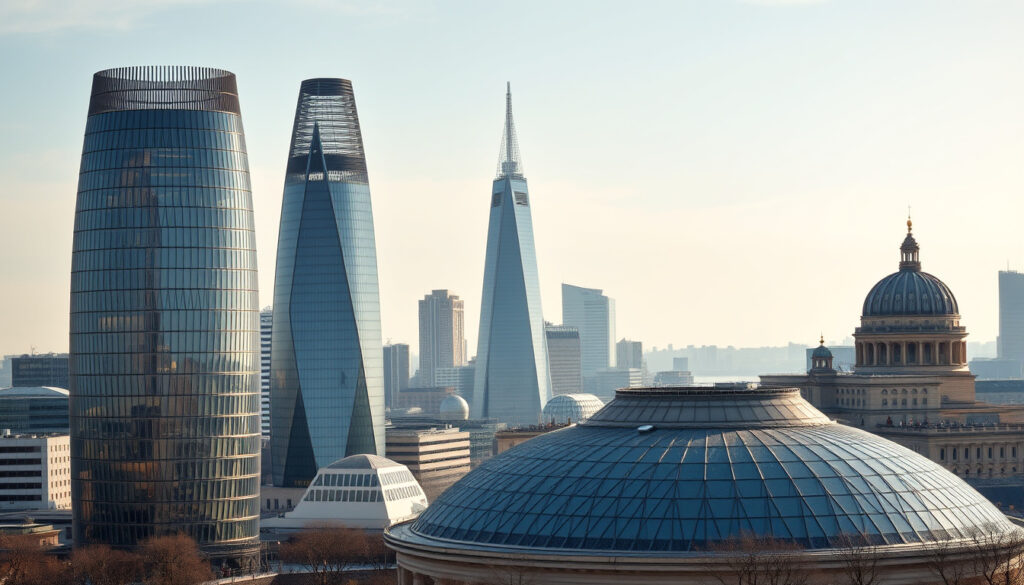
The Gherkin (30 St Mary Axe, London)
- Completed in 2004 in London as the headquarters for Swiss Re Encyclopaedia Britannica.
- Known for its distinctive pickle-like shape and energy-efficient design, using natural ventilation and a double-skin facade Encyclopaedia Britannica.
- Often called “The Gherkin,” it has become a symbol of London’s modern skyline.
Foster’s approach to tall buildings is echoed in another landmark structure: Christ the Redeemer: History, Facts, and Why It’s a Wonder — both exemplify how iconic design can define a city’s identity.
Other iconic structures
- Reichstag Dome, Berlin – a glass dome over the German parliament symbolizing transparency Encyclopaedia Britannica.
- HSBC Main Building, Hong Kong – a high-tech headquarters with a suspension system that freed the floor plan Encyclopaedia Britannica.
- Millau Viaduct, France – the world’s tallest bridge, combining engineering and aesthetics International Academy of Architecture.
- Beijing International Airport Terminal 3 – a massive, sustainable transport hub International Academy of Architecture.
The pattern: Foster uses iconic silhouettes to solve structural and environmental problems simultaneously.
Is Norman Foster the richest architect in the world?
Net worth estimates and rankings
- Foster has been listed on The Sunday Times UK Rich List, the only architect to appear World-Architects.
- Estimates vary: some sources place his net worth at about $240 million World-Architects; another analysis suggests $250 million Archinect.
- Because Foster’s wealth is private, these figures should be treated as informed estimates rather than verified facts.
Net worth figures in architecture are notoriously opaque. Unlike public company CEOs, architects rarely disclose personal finances, making any exact claim speculative.
Other wealthy architects
- Comparable figures include Sir David Adjaye and Frank Gehry, but no other architect has maintained a consistent place on a national rich list.
- Foster’s practice is the main wealth driver: Foster + Partners generates revenue from global commissions across all building types.
The catch: wealth rankings for architects rest on estimates, not audited disclosures, so the margin of error is wide.
Where does Norman Foster live now?
Residences in Switzerland and UK
- Reports indicate Foster maintains homes in Switzerland and London, though he keeps his private life out of the spotlight.
- He continues to lead Foster + Partners from its London headquarters and from project sites globally.
Lifestyle and personal projects
- Foster is known to be a private person who focuses on his work and family.
- He has designed furniture and yachts, reflecting his belief that architecture extends to all scales of design.
What this means: his personal geography mirrors his professional reach — no single base contains him.
What is Norman Foster’s architectural style?
High-tech architecture principles
- Foster is a seminal pioneer of high-tech architecture Wikipedia.
- Characterized by exposed steel structures, extensive glass facades, and prefabricated components.
- His work prioritizes functional efficiency, industrial materials, and a clean modernist aesthetic Encyclopaedia Britannica.
Sustainability and innovation
- Foster was an early adopter of energy-efficient strategies: natural ventilation, solar shading, and green roofs.
- The Gherkin uses 50% less energy than a conventional skyscraper of its size Encyclopaedia Britannica.
- His practice’s research unit explores smart materials and adaptive building systems.
The implication: his buildings aim to perform as well as they look, integrating engineering and environmental goals from the start.
Clarity check: confirmed facts vs open questions
Confirmed facts
- Born in Manchester in 1935
- Founded Foster + Partners in 1967
- Pritzker Prize winner (1999)
What’s unclear
- Exact net worth figure is privately held and varies by source
- Number of personal residences not publicly confirmed
- Year of knighthood — some sources cite 1990, others 1991
- Attribution of 30 St Mary Axe — designed by Foster + Partners, not solely by Foster
In his own words
I still get the same buzz from designing buildings.
— Lord Norman Foster, quoted in Pritzker Prize materials Pritzker Architecture Prize
Foster’s buildings are a celebration of technology, light, and space—he has redefined what architecture can be in the modern age.
— Pritzker Jury citation Pritzker Architecture Prize
The pattern is clear: Foster took the high-tech vocabulary of the 1960s and turned it into a global business. For aspiring architects in the United Kingdom, the lesson is not just about design—it is about building a practice that combines craft, commerce, and a consistent editorial worldview. The alternative is to remain a boutique studio; the reward for Foster’s approach is a permanent place on the Rich List and a legacy that shapes cities.
morningtimes.uk, britannica.com, imdb.com, metaunfolded.com, britishheritage.org, architexturez.net, trendcenter.dk
Frequently asked questions
Is Norman Foster still practicing architecture?
Yes, he serves as Executive Chairman of Foster + Partners and remains actively involved in design projects around the world. His latest works include Apple Park and Bloomberg’s European Headquarters.
Where did Norman Foster study architecture?
He studied at the University of Manchester (Bachelor’s in architecture and city planning, 1961) and later at Yale University (Master’s in Architecture) on a Henry Fellowship.
How many buildings has Norman Foster designed?
His practice has completed more than 300 projects across over 50 countries, ranging from airports and bridges to museums and corporate headquarters.
Did Norman Foster work with Richard Rogers?
Foster and Rogers were contemporaries and both were part of the high-tech movement. They collaborated on early projects including the Reliance Controls Factory in 1967, but later founded their own firms.
What building did Norman Foster design in New York?
He designed the Hearst Headquarters (Hearst Tower) at 300 West 57th Street, completed in 2006, which features a distinctive diagrid structure and sustainable design.
Is Norman Foster on the UK Rich List?
Yes, he has appeared multiple times on The Sunday Times UK Rich List, often as the only architect listed.
More related posts
 Brooks Nader: Bio, Age, Husband, Net Worth & SI Swimsuit
 Luke Humphries: Partner, Net Worth, Hand Injury & Ranking
 Jack Doherty: Arrest, Net Worth, Girlfriend, and Biography (2025)
 Ron Howard: Biography, Net Worth, Condition, and Movies
 Casper Ruud: Personal Life, Family & Tennis Facts
 Professor Severus Snape: Good or Bad? Age, Death & Motives
 Harry Wilson: Transfer Fee, Salary, Net Worth & Family
 Little Simz lawsuit, Gorillaz, Top Boy, and biography
