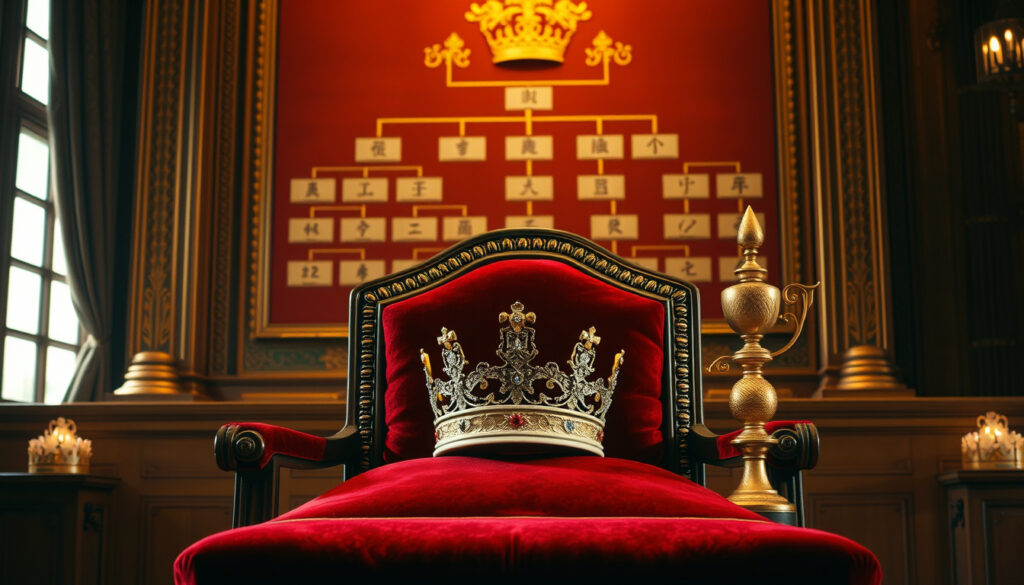
English Royal Family: Current Members and Succession
Most people have a passing idea of who the current English royals are — a king, a queen, and a prince or two waiting in line. But the actual hierarchy, the rules of succession, and who really holds influence can feel like a puzzle, so this guide sorts through official records and historical facts to show you exactly who stands where, from King Charles III to the newest additions far down the line.
Current monarch: King Charles III ·
Length of monarchy: over 1200 years ·
Number of monarchs: 63 British monarchs ·
Royal house: House of Windsor (since 1917) ·
Official residence: Buckingham Palace ·
Head of state role: ceremonial
Quick snapshot
- King Charles III is current monarch since September 8, 2022 (The Royal Family (official UK monarchy))
- William, Prince of Wales is first in line (The Royal Family)
- House of Windsor established in 1917 (The Royal Family)
- King Charles’ favorite food is not officially confirmed
- Exact net worth of Charles vs William is not public
- Queen Camilla’s drinking habits are not officially documented
- Why Kate and William eat separately is not publicly addressed
- 1917: House of Windsor established (The Royal Family)
- 2022: King Charles III becomes monarch (Wikipedia (biography))
- 2023: Coronation of Charles and Camilla (BBC News)
- William expected to succeed in due course
- Possible succession law changes debated
- Public favor and wealth dynamics continue shifting
Five essential details define the current monarchy’s structure at a glance.
| Label | Value |
|---|---|
| Current monarch | King Charles III |
| Official website | www.royal.uk |
| Current royal house | House of Windsor |
| Number of living senior royals | approximately 15 |
| Last coronation | May 6, 2023 |
Who is the current royalty in England?
Current monarch and consort
- King Charles III has been the sovereign since the death of his mother, Queen Elizabeth II, on September 8, 2022 (The Royal Family (official monarchy portal)).
- Queen Camilla is his wife and Queen Consort, crowned alongside him on May 6, 2023 (Wikipedia (biography)).
- The immediate senior royals also include William, Prince of Wales; Catherine, Princess of Wales; their three children; and the Duke of Edinburgh (BBC News).
Line of succession
The order of succession, defined by the Royal Family’s official records, lists more than 20 people. The first 10 are:
- William, Prince of Wales (first in line)
- Prince George of Wales
- Princess Charlotte of Wales
- Prince Louis of Wales
- Prince Harry, Duke of Sussex
- Prince Archie of Sussex
- Princess Lilibet of Sussex
- Andrew Mountbatten-Windsor
- Princess Beatrice, Mrs. Edoardo Mapelli Mozzi
- Princess Eugenie, Mrs. Jack Brooksbank
All sourced from The Royal Family (official succession page).
The catch: the list extends well beyond immediate heirs, including the Princess Royal and the Tindall children, showing that tradition dictates descent over title or popularity.
What is the order of English royalty?
Chronological list of monarchs
63 monarchs have ruled England and later Britain over more than 1,200 years, from Egbert of Wessex (c. 802–839) to Charles III (Wikipedia (comprehensive historical list)). The lineage includes the Norman, Plantagenet, Tudor, Stuart, Hanover, and Windsor houses.
Royal houses in order of rule
The major houses that shaped English rule:
- House of Wessex (802–1016)
- House of Normandy (1066–1154)
- House of Plantagenet (1154–1485)
- House of Tudor (1485–1603)
- House of Stuart (1603–1714)
- House of Hanover (1714–1901)
- House of Saxe-Coburg and Gotha (1901–1917)
- House of Windsor (1917–present) (The Royal Family)
The pattern: each house came with a shift in power base, religion, or succession law — the Windsor name itself was chosen in 1917 to distance the monarchy from German ties during World War I.
Who is the most famous English royal?
Queen Elizabeth II’s global recognition
Queen Elizabeth II reigned from 1952 to 2022, the longest-serving British monarch and arguably the most recognized figure of the 20th century (Wikipedia (biography)). Her image appeared on currencies, stamps, and diplomatic gifts worldwide.
Other historically famous monarchs
Henry VIII (reigned 1509–1547) remains famous for his six wives and the break with Rome. Queen Victoria (1837–1901) gave her name to an era and oversaw the peak of the British Empire (Wikipedia (Henry VIII)). Today, Charles III inherits that recognition but in a very different, media-saturated era.
The implication: familiarity shifts with reigns — Elizabeth II’s 70-year tenure set a record that may not be matched, while Charles faces constant comparison.
Who is richer, Charles or William?
Wealth estimates for King Charles III
King Charles III inherited personal wealth from the late Queen, including investments, art, and the Duchy of Lancaster estate. Published estimates from financial reporters suggest his net worth exceeds £1 billion, but official confirmation does not exist (Wikipedia (Duchy of Lancaster)).
Wealth of William, Prince of Wales
Prince William receives income from the Duchy of Cornwall, which generates more than £20 million annually, and inherited around £10 million from his mother and private assets from the Royal Family (Wikipedia (Duchy of Cornwall)). His net worth is also not publicly itemized.
The trade-off: Charles holds the larger inherited estate, but William controls a steady revenue stream from the Duchy of Cornwall — and neither releases a full personal balance sheet.
| Aspect | King Charles III | William, Prince of Wales |
|---|---|---|
| Primary income source | Duchy of Lancaster (state support) | Duchy of Cornwall (estate profits) |
| Reported net worth (unofficial) | Over £1 billion (estimates) | ~£100 million (estimates) |
| Public disclosure | Limited (sovereign grant reports) | Limited (Duchy accounts) |
What this means: the wealth comparison highlights the opacity of royal finances, with both relying on inherited estates and limited public disclosure.
Is Meghan Markle still a royal?
Status after stepping back
Meghan Markle and Prince Harry stepped back as senior working royals in January 2020 in what was called the “Megxit” agreement (BBC News). They no longer carry out official duties on behalf of the Crown and no longer receive public funds for their activities.
Titles and roles
They retain their titles — Duke and Duchess of Sussex — and remain in the line of succession (Harry is 5th, Archie 6th, Lilibet 7th) (Wikipedia (succession)). They are royalty by birth and marriage, but not active senior royals.
Why this matters: the distinction between “royal by title” and “working royal” matters for public funding, security, and protocol — a nuance many casual observers miss.
Timeline
- 1917: King George V establishes the House of Windsor (The Royal Family)
- 1952: Queen Elizabeth II ascends the throne (Wikipedia)
- 2022: King Charles III becomes monarch after Elizabeth’s death (Wikipedia)
- 2023: Coronation of King Charles III and Queen Camilla (BBC News)
Clarity check
Confirmed facts
- King Charles III is current monarch (official royal.uk)
- William, Prince of Wales is first in line (official royal.uk)
- House of Windsor is current royal house (official royal.uk)
- Queen Elizabeth II reigned 1952–2022 (Wikipedia)
- 63 monarchs have ruled England/Britain (historical record)
What remains unclear
- King Charles’ favorite food is not officially confirmed
- Exact net worth of Charles vs William is not public
- Queen Camilla’s drinking habits are not officially documented
- Why Kate and William eat separately is not publicly addressed
- Removing Andrew from succession would require a messy legislative process (The Conversation (legal analysis))
Perspectives from the experts
“The order of succession is the sequence of members of the Royal Family in the order in which they stand in line to the throne.”
The Royal Family (official monarchy portal)
“The succession descends from William to his children, then Prince Harry and his children, then Prince Andrew and his children, then Prince Edward and his children, then Princess Anne and her children.”
“Removing Andrew Mountbatten-Windsor from the line of succession would require a messy and complicated legislative process.”
The monarchy’s structure is rigid by law, but public perception and media scrutiny create a constant pressure to adapt. For a family that operates on centuries-old rules, the challenge is balancing tradition with transparency.
Line-of-succession debates may intensify as the younger generation — especially Prince George and Charlotte — grows up under intense media focus, while the Sussexes’ commercial ventures redefine what “royal influence” means outside the palace.
Summary
The English monarchy today is a study in contradictions: a hereditary institution in a democratic age, a symbol of continuity facing relentless scrutiny. For anyone following the current royals, the key distinction is between formal roles (who sits on the throne, who is in line) and real-world power (wealth, public favor, media leverage). The implication for British observers is clear: expect more transparency demands and succession debates, not less.
youtube.com, youtube.com, facebook.com, youtube.com, abc7ny.com, tsoshop.co.uk, britroyals.com, facebook.com, reddit.com, ozcurrently.com
Frequently asked questions
What is the official royal family name?
Windsor. King George V changed the name from Saxe-Coburg and Gotha in 1917 (Wikipedia (House of Windsor)).
Who is next in line to the throne after Charles?
William, Prince of Wales is first, followed by his children George, Charlotte, and Louis (Wikipedia (succession)).
How does the English royalty make money?
The monarch receives the Sovereign Grant (a percentage of Crown Estate profits), private income from the Duchy of Lancaster, and personal investments (Wikipedia (Sovereign Grant)).
Does the royal family have a last name?
Members use Mountbatten-Windsor as a surname when needed, though most use their title and territorial designation (Wikipedia (Mountbatten-Windsor)).
What powers does the monarch have today?
The monarch retains ceremonial duties (appointing the Prime Minister, opening Parliament) but real political power rests with Parliament.
Are there rules about who can marry a royal?
Historically, the Royal Marriages Act 1772 applied; today, the first six in line need the monarch’s permission under the Succession to the Crown Act 2013.
How is the royal family tree organized?
It follows strict primogeniture (eldest child first) since 2013, with male-preference primogeniture abolished. The official tree is maintained by The Royal Family.
More related posts
 60 Days From Today: Exact Date, Weeks, Months & Memory Tricks
 Best Free AI Image Generators 2026: Tested & Compared
 Famous People: How Rankings, History, and Geography Differ
 Is Dyslexia a Learning Disability – Definition, Symptoms & Facts
 The Persistence of Memory – Dalí’s Melting Clocks Explained
 Jen Affleck: Who She Is, Family, and Ben Affleck Confusion
 Rayan Ait-Nouri: Biography, Stats, Family, and Injury Update
