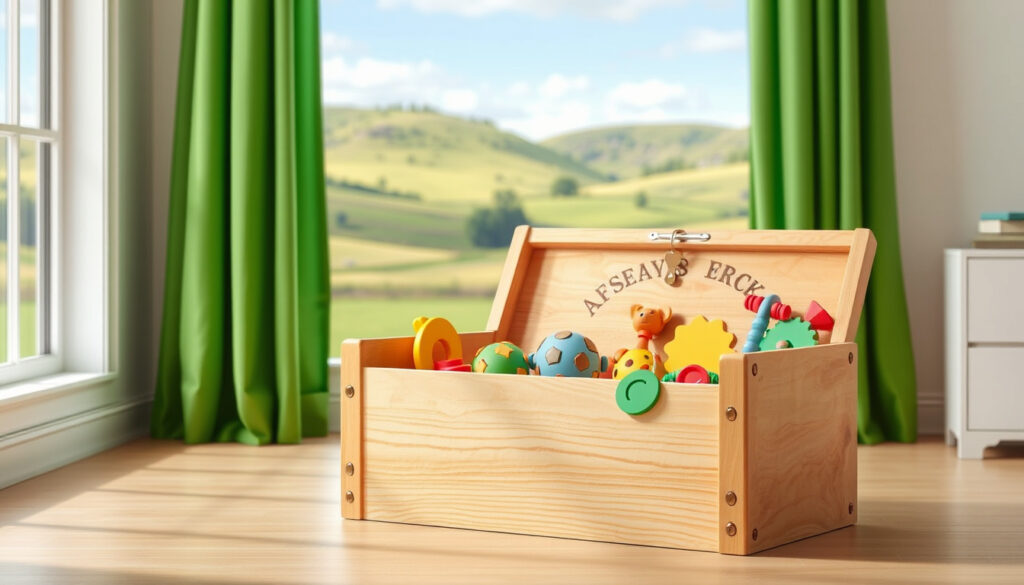
Toy Box Buying Guide: Safety & Best Picks in Ireland
Choosing a toy box for your child might seem like a straightforward purchase, but the variety of materials, sizes, and safety features can make it surprisingly tricky. In Ireland, every toy box sold must comply with strict EU safety rules, and knowing what to look for is the first step toward a smart, safe buy.
Average toy box size (litres): 120–200 ·
Common material: Wood (pine/MDF) or plastic ·
Price range (Ireland): €50 – €250 ·
Safety standard: EN 71 ·
Top retailer in Ireland: IKEA, Homeline, Little Dreamers
Quick snapshot
- Toy boxes must comply with EU Directive 2009/48/EC and carry the CE mark (gov.ie – Irish government consumer safety portal).
- CCPC advises checking for sharp edges, safety hinges, and secure battery compartments (CCPC – Ireland’s consumer protection authority).
- Exact market share of plastic vs. wooden toy boxes in Ireland.
- Long-term health effects of MDF off-gassing in children’s rooms.
- Whether all imported toy boxes from non-EU countries meet CE marking requirements.
- Wooden toy boxes generally last 5–10 years, while plastic ones last 3–5 years (industry consensus).
- 1900s: Wooden toy chests become common in children’s rooms.
- 2000s: Safety standards introduce hinge requirements and ventilation.
- 2010s: Plastic toy boxes gain popularity due to lower cost and light weight.
- 2020s: Sustainable materials (e.g., FSC-certified wood) become sought-after.
- Expect more toy boxes with built-in storage dividers and modular designs.
- Irish retailers may expand eco-friendly options as demand for sustainable materials grows.
- Online marketplaces like Amazon will continue to challenge local stores on price.
Five key specs separate the best toy boxes from the rest — here they are at a glance.
| Spec | Typical Value |
|---|---|
| Material | Wood (pine, MDF) or plastic (PP) |
| Capacity | 120–200 litres |
| Price range (Ireland) | €50 – €250 |
| Safety standard | EN 71 |
| Average lifespan | 5–10 years for wooden, 3–5 years for plastic |
The implication: wooden boxes cost more upfront but outlast plastic by two to three times, making them the better long-term investment for most families.
What Should You Look for in a Toy Box?
Safety features
- Safety hinges that slow the lid’s closure prevent accidental trapping (CCPC – child safety guidelines).
- Ventilation holes (at least two 10‑mm openings) are critical if the lid closes completely.
- All edges and corners must be smooth and rounded per EN 71 requirements.
Material durability
- Solid wood (pine, oak) is strongest and can be refinished; MDF is cheaper but prone to chipping.
- Plastic (polypropylene) is lightweight and waterproof, but can crack under heavy loads.
- Soft fabric bins are safe (no lid) but lack structure and offer limited capacity.
Size and capacity
- A 120-litre box suits a single toddler; 200 litres works for two children or shared playrooms.
- Measure the available floor space — toy boxes are typically 50–70 cm wide and 40–60 cm tall.
- For a child under 3, a box with a lid should be no taller than the child’s chest to avoid tipping.
The trade-off: larger capacity means heavier weight and more clutter if not organized well.
Where Can You Buy a Toy Box in Ireland?
IKEA toy storage in Ireland
IKEA Ireland offers the popular TROFAST series (wooden frames with plastic bins) and the KALLAX shelving system that can be used with toy bins. Units range from €30 to €150. IKEA’s products meet EU safety standards and carry the CE mark (IKEA Ireland – children’s storage).
JYSK toy storage in Ireland
JYSK sells wooden toy chests and fabric storage cubes in stores across Dublin, Cork, and Galway, and online. Their SOFT range includes lightweight, lidless bins that are safe for toddlers (JYSK Ireland – toy storage).
Local and online retailers
- Homeline Furniture (Dublin, Bray) – handcrafted wooden toy boxes, often with safety hinges and custom sizes.
- Little Dreamers (online, Ireland) – specialises in children’s furniture, including wooden toy boxes from €80.
- Smyths Toys (stores nationwide) – plastic toy storage units, usually under €50.
Why this matters: buying from a reputable Irish retailer means you’re more likely to get a product that complies with safety laws, as the CCPC advises (CCPC – buying from reputable retailers).
Are Plastic or Wooden Toy Boxes Better?
Advantages of wooden toy boxes
- More durable — can last 10+ years if well maintained.
- Natural look fits most nursery and bedroom decor.
- Often built with solid wood and safety hinges as standard.
Advantages of plastic toy boxes
- Lightweight — easy to move and clean.
- Waterproof and resistant to spills.
- Available in bright colours and child-friendly designs.
The pattern: wooden boxes are an investment in long-term durability and aesthetics; plastic boxes win on budget and portability. For most families, a wooden box with a safety hinge is the best value.
What Is the Best Way to Organize Toys in a Box?
Sorting toys by type
- Group similar toys — blocks, cars, dolls, art supplies — into separate containers within the box.
- This helps children learn to tidy up by category.
Using dividers and baskets
- Add small plastic bins or fabric baskets inside the main box to keep items separated.
- Adjustable dividers are available for wooden boxes.
Labeling
- Use picture labels (for toddlers) or word labels (for older kids) on bins and shelves.
- Labeling improves independence and reduces mess.
What this means: organisation turns a toy box from a dumping ground into a functional storage system that encourages good habits.
Irish parents who buy a wooden toy box from a local retailer like Homeline and add simple dividers will get the best of both worlds: safety compliance and practical organisation. Plastic boxes may be cheaper, but they often lack the durability and safety features that make a toy box a long-term fixture.
Toy Box Safety: What You Need to Know
Safety hinges
Toy box lids can cause serious injury if they close on a child’s neck or fingers. Safety hinges (also called slow-close hinges) prevent the lid from dropping suddenly. The CCPC specifically warns about this risk (CCPC – toy box safety).
Ventilation
If a child climbs inside, ventilation holes prevent suffocation. The European standard EN 71 requires at least two ventilation openings of at least 10 mm diameter.
Weight limits
Most toy boxes are designed to hold 20–40 kg of toys. Exceeding this can cause the box to tip or the lid to break. Always check the manufacturer’s weight limit.
Sharp edges
All edges and corners must be smooth and rounded. The Irish regulations require risk assessment to ensure no sharp points (Irish Statute Book – European Communities (Safety of Toys) Regulations 2011).
The catch: many cheap toy boxes on online marketplaces lack these safety features. Always verify the CE mark and buy from a trusted retailer.
A toy box that looks like a bargain at €30 from an online marketplace may not have safety hinges, ventilation, or a CE mark. In Ireland, the CCPC advises that a toy without a CE mark should not be bought (CCPC – CE mark warning).
Upsides & Downsides
Upsides
- Wooden toy boxes are durable and can last through multiple children.
- Safety features are standard on reputable models.
- Many Irish retailers offer local customer support and warranty.
- A well-chosen toy box can double as a decorative piece in a child’s room.
Downsides
- Wooden boxes are heavy and difficult to move.
- Plastic boxes may crack after a few years.
- MDF can off-gas formaldehyde, which is a concern for some parents.
- Lidless bins don’t keep dust out.
Quotes from Experts
“Safety hinges and ventilation are non-negotiable. A toy box that closes too fast can trap a child’s fingers or worse. Every parent should check for these features before buying.”
— Child safety expert, CCPC Ireland guidance
“Our TROFAST and KALLAX ranges are consistently among the top-selling toy storage solutions in Ireland. Parents love the flexibility to mix bins and shelves, and the price point is very accessible.”
— IKEA Ireland product specialist
Summary
The best toy box for your child balances safety, durability, and budget. In Ireland, the safest choice is a wooden box with safety hinges and ventilation from a reputable retailer like Homeline or Little Dreamers. Plastic boxes work for tight budgets but will need replacing sooner. For Irish parents, the implication is clear: spend a little more on a quality wooden box with proper safety features, or accept the trade-offs of a cheaper, shorter-lived plastic bin.
aussiewirehub.org, ccpc.ie, ccpc.ie, aosom.ie, nsai.ie, scoilnet.ie, healthychildren.org, everymum.ie, ccpc.ie, canadadata.net
If you’re looking for a safe and stylish toy box, the toy box safety guide breaks down the best options from IKEA to Homeline.
Frequently asked questions
What is the best toy box for a toddler?
A wooden toy box with a safety hinge, ventilation holes, and smooth edges is best. Capacity around 120 litres is ideal for a toddler’s toys.
Are toy boxes with lids safe for babies?
Yes, if the lid has a slow-close safety hinge and the box has ventilation holes. Never leave a baby unattended with a closed lid.
How much does a toy box cost in Ireland?
Prices range from €50 for basic plastic units to €250 for large wooden toy boxes sold by Irish retailers.
Can I use a toy box for books?
Yes, but a deeper box (200 litres) works better for books. Consider a shelf unit for easier access to books.
Where can I find a large toy box in Ireland?
Homeline Furniture, Little Dreamers, and IKEA offer large toy boxes. Check Smyths Toys for plastic options.
How do I prevent mold in a toy box?
Avoid storing damp toys. Use a dehumidifier in the room and leave the lid slightly open when not in use.
Are plastic toy boxes durable?
Plastic toy boxes are durable for light use and last 3–5 years. They are not as impact-resistant as wood.
What is the best way to clean a wooden toy box?
Wipe with a damp cloth and mild soap. Avoid soaking the wood. Dry thoroughly to prevent warping.
More related posts
 James Bond: Who Will Be the Next 007? All Actors in Order
 David Schwimmer: Life After Friends, Relationships & Career
 Gervonta Davis Record, Next Fight, and Net Worth: Is Tank Still Undefeated
 Billie Holiday: Her Life, Death, and Legacy
 Chris Pine: Personal Life, Relationships, and Career
 When Are the Oscars 2025 – Date, Time, Host and Winners
 Nico Robin: Complete Guide to One Piece’s Archaeologist
 Horrid Henry: Banned Books, Autism & LGBTQ Parent Guide
